
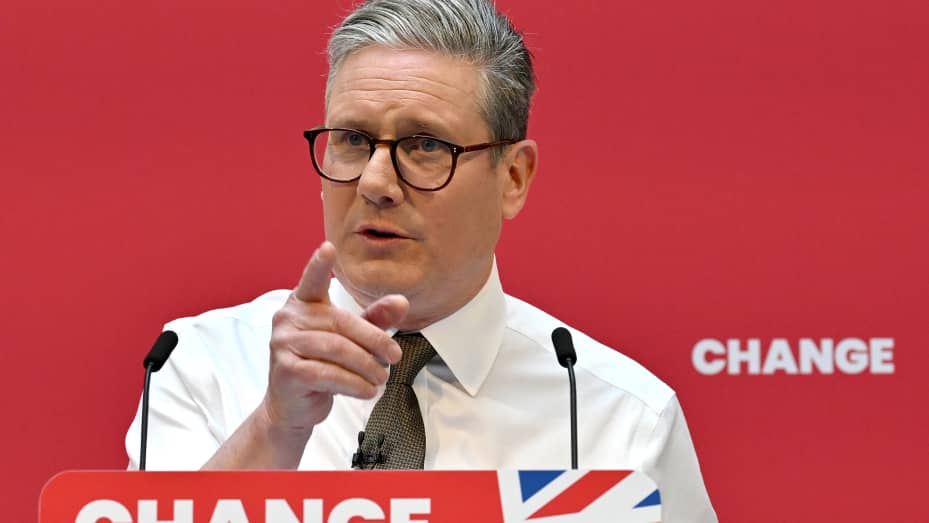
A Labour government in the United Kingdom would likely herald a significant shift in the country’s approach to achieving net zero emissions, characterised by increased investment in green technologies, comprehensive decarbonization strategies, and an emphasis on social justice. Labour has consistently advocated for substantial public investment in renewable energy sources, such as wind and solar power, to drive the transition to a low-carbon economy. This commitment includes expanding green energy production and modernizing the national grid to accommodate the increased reliance on renewables, thus ensuring a stable and sustainable energy supply.
Central to Labour’s vision is decarbonising critical sectors like transport, housing, and industry. For the transport sector, Labour plans to promote the adoption of electric vehicles (EVs), enhance public transport systems, and develop infrastructure to support cycling and walking. In housing, Labour intends to implement large-scale retrofitting programs to improve energy efficiency, support the installation of heat pumps, and ensure new buildings adhere to zero-carbon standards. In the industrial sector, Labour would likely encourage the adoption of carbon capture and storage (CCS) technologies and support industries in transitioning to low-carbon processes, thereby reducing their overall carbon footprint.
Labour’s approach would also involve implementing robust policy and regulatory frameworks to support these transitions. This includes strengthening carbon pricing mechanisms, enforcing stricter emissions standards across various industries, and introducing policies to promote sustainable farming and land use practices. Additionally, Labour has suggested bringing certain parts of the energy sector into public ownership to ensure a more coordinated and equitable transition to net zero. This could involve taking control of the national grid and setting up a new publicly owned energy generation company dedicated to driving renewable energy projects.
On the international stage, a Labour government is expected to play a proactive role in climate diplomacy. This would involve advocating for stronger global commitments to climate action and supporting developing countries in their transition to sustainable practices through financial and technological aid. Domestically, Labour’s focus on social justice would ensure that the transition to a green economy is fair and inclusive. This involves providing opportunities for retraining and employment in new green sectors for workers displaced from traditional industries and addressing fuel poverty through targeted subsidies and support for low-income households to adopt energy-efficient solutions.
The future of net zero in our homes is certainly up in the air, we will all be watching the space carefully to see if this could be the push we need to agree upon a realistic approach to net zero.